19 Jun 2026
Blockchain Applications for Verifying Betting Odds in Real-Time Exchanges
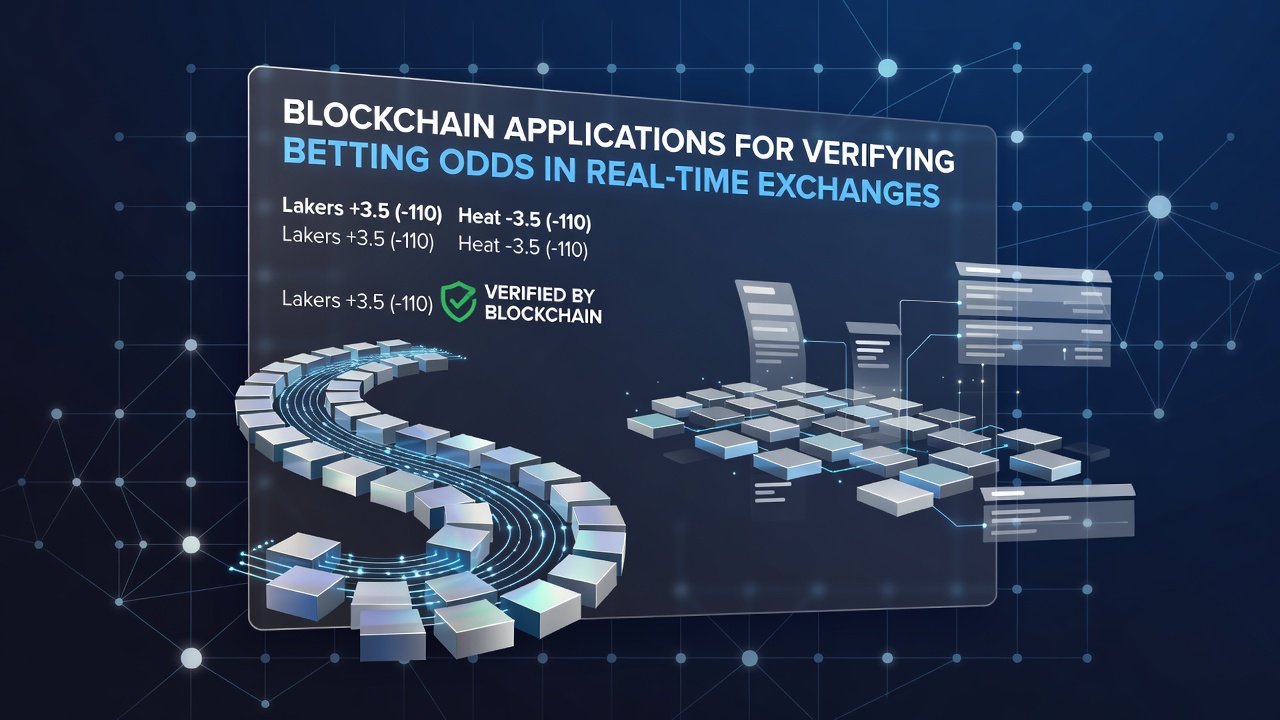
Blockchain technology has found applications in verifying betting odds within real-time exchanges, where platforms process fluctuating wagers on events ranging from sports matches to financial instruments. Distributed ledgers record odds changes as immutable entries, allowing participants to confirm that posted figures match the data supplied by external feeds at the moment of placement. This approach addresses discrepancies that arise when centralized systems update prices without transparent audit trails.
Real-time exchanges rely on continuous data streams to adjust odds based on incoming bets and external events. Blockchain integrates with oracle networks that pull information from verified sources, then timestamp and hash each update onto the chain. As of June 2026, multiple platforms have deployed permissioned blockchains to handle high-frequency adjustments while maintaining compliance with varying regional standards.
Core Mechanisms Behind Verification Processes
Smart contracts execute the core verification steps by comparing incoming bet requests against the most recent ledger entry for a given market. When a user submits a wager, the contract checks the hash of the current odds block against the live feed value, rejecting any mismatch that exceeds predefined tolerance thresholds. This automation reduces manual intervention and creates an auditable sequence of every adjustment.
Consensus protocols such as practical Byzantine fault tolerance ensure that multiple validator nodes agree on each new block before it finalizes. Nodes operated by independent exchanges or regulatory observers participate in the validation round, which prevents any single entity from altering historical odds without detection. Researchers at institutions including the University of Melbourne have documented how these protocols scale to thousands of transactions per second during peak betting windows.
Integration with External Data Sources
Decentralized oracles serve as the bridge between off-chain events and on-chain records. Providers aggregate inputs from licensed data vendors, sports governing bodies, and financial exchanges, then submit signed attestations that smart contracts accept only after multi-source confirmation. One established implementation combines feeds from European regulatory agencies with North American statistical services to cover global events.
Platforms that adopted this model in 2025 reported fewer disputes over odds accuracy, according to internal metrics shared with industry groups. The system logs each oracle submission with its originating source and cryptographic signature, enabling post-event audits that trace discrepancies back to specific data providers rather than the exchange itself.

Operational Examples Across Markets
European operators have tested blockchain layers on top of existing exchange engines for tennis and football markets, where odds shift rapidly during live play. Each price movement receives a unique transaction identifier that bettors can query through public explorers, confirming that the figure they accepted aligned with the chain record at that instant. Asian exchanges handling esports have followed similar patterns, integrating with regional gaming associations to meet local transparency requirements.
North American platforms exploring the same technology cite advantages in multi-state compliance, since a single ledger can satisfy reporting needs across jurisdictions without duplicating data storage. A 2026 pilot coordinated through an industry consortium demonstrated that verification latency remained under two seconds even when processing concurrent bets across several sports simultaneously.
Security and Compliance Considerations
Encryption standards protect participant identities while preserving transaction visibility for regulatory review. Zero-knowledge proofs allow exchanges to demonstrate that odds followed predefined algorithms without revealing proprietary weighting factors. Regulators in Australia and Canada have issued guidance encouraging such cryptographic methods as part of broader efforts to strengthen market integrity.
Energy consumption remains a factor when selecting consensus mechanisms, prompting many betting implementations to favor proof-of-stake variants over earlier proof-of-work designs. Industry reports indicate that these choices align with sustainability targets set by operators aiming to reduce environmental impact while maintaining verification speed.
Future Developments in Verification Standards
Interoperability protocols under discussion would allow separate blockchains operated by different exchanges to reference one another's odds records, creating a shared verification layer without requiring full data consolidation. Standards bodies in Asia and Europe continue to evaluate frameworks that could support cross-border recognition of on-chain attestations.
Additional layers incorporating machine learning models for anomaly detection are being tested alongside blockchain ledgers, flagging unusual odds patterns for human review while the core verification remains automated. These hybrid systems build on existing infrastructure rather than replacing it outright.
Conclusion
Blockchain applications continue to expand within real-time betting exchanges by supplying verifiable records of odds movements and automated enforcement through smart contracts. The combination of oracles, consensus mechanisms, and cryptographic tools provides a structured method for maintaining transparency across diverse regulatory environments. Ongoing pilots and standards work indicate further refinement of these systems through 2026 and beyond, with emphasis on interoperability and compliance efficiency.