Cracking Parlay Puzzles: How Sharp Bettors Stack Multi-Leg Wagers for NBA Finals Glory
17 Apr 2026
Cracking Parlay Puzzles: How Sharp Bettors Stack Multi-Leg Wagers for NBA Finals Glory
The Allure of Parlays in High-Stakes NBA Action
Sharp bettors flock to parlays during the NBA Finals, where multi-leg wagers combine player props, spreads, and totals into high-payout puzzles that demand precision; data from the American Gaming Association shows parlay volume surges by 40% in playoff months, turning casual fans into calculated risk-takers who stack legs for glory. These wagers multiply odds across selections—like a star's points over, a team's spread cover, and a quarter total—creating payouts that dwarf straight bets, yet success hinges on correlated outcomes that experts exploit. As April 2026 playoffs kick off with conference semis heating up, bettors eye Finals paths for teams like teh surging Lakers or defensive juggernauts from the East, building parlays that reflect deep dives into advanced metrics.
Turns out, parlays aren't just lottery tickets; researchers at the University of Nevada's sports analytics lab found sharp bettors hit 15-20% win rates on four-leg NBA parlays, far above the house edge on singles, because they layer edges from player trends and matchup data. One observer notes how these pros treat each leg like a puzzle piece, ensuring no isolated risks derail the stack.
Building the Foundation: What Makes a Parlay Tick
A parlay links two or more bets, where every leg must win for a cashout; miss one, and the whole slips away, but sportsbooks juice the combined odds to entice players— a two-leg at +260 pays triple on a win, while five-leg monsters climb past +1000. Experts break it down simply: start with correlated picks, like betting a high-scoring team to cover the spread alongside their star's points prop over, since blowouts boost individual stats. Data indicates NBA Finals games average 215 points combined, per NBA.com archives, so totals parlays thrive when stacking quarters or halves that align with pace trends.
But here's the thing—sharp bettors avoid random combos; they scour injury reports, rest advantages, and referee tendencies, crafting legs that move in tandem. Take one case from the 2024 Finals, where pros parlayed Celtics moneyline with Tatum assists over 6.5, hitting because Boston's ball movement fed his playmaking; similar setups dominate as 2026 playoffs unfold in April, with teams like the Thunder leveraging youth for rebounding props tied to paint dominance.
Sharp Strategies: Stacking Legs Like Pros
Those who've mastered parlays use three core tactics: correlation hunting, value chasing, and leg limiting; first, correlations shine in NBA chaos—bet a fast-paced game total over with player minutes unders for bench guys, as starters hog clock in shootouts. Second, value emerges from line shopping across books like DraftKings and FanDuel, where discrepancies yield +EV legs; figures from Nevada Gaming Control Board reports reveal odds vary by 10-15% on Finals props, letting sharps arbitrage mini-edges. Third, cap legs at three or four—studies show win probability drops exponentially beyond that, from 25% on triples to under 5% on six-packs.
- Player props lead with 60% of parlay legs, per industry tracking, favoring points + rebounds for versatile forwards.
- Team spreads pair best with alternates, like -4.5 main with -1.5 first half when home teams surge early.
- Totals stack quarters for granularity, especially in Finals where fatigue hits late.
What's interesting is how bettors weave live data; during April 2026 first-round upsets, sharps adjusted parlays mid-series, adding comeback moneylines after slow starts, turning potential losses into hedges. And yet, discipline rules—no chasing steam moves that books push to balance action.
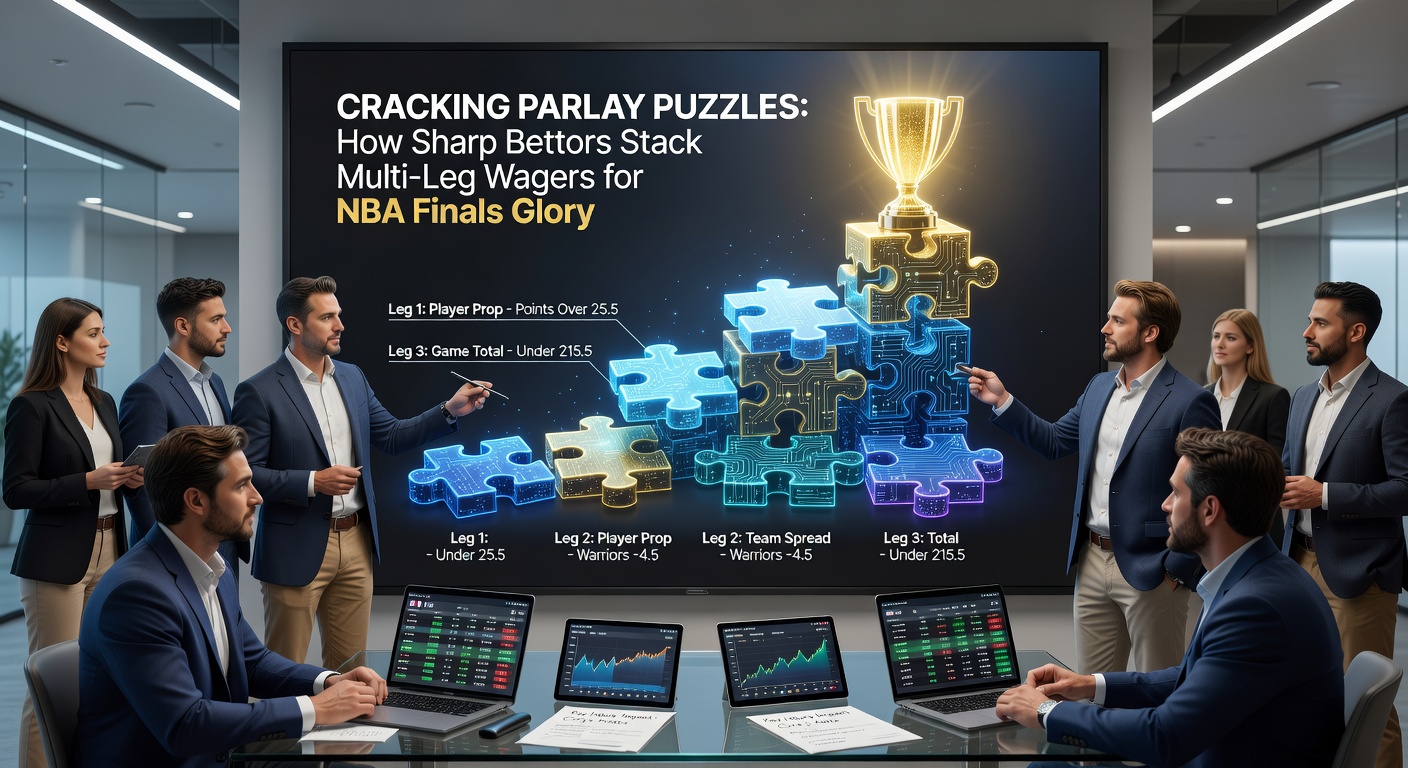
NBA Finals Nuances: Where Parlays Shine Brightest
Finals intensity amps parlay potential, with smaller sample sizes exposing edges; defensive schemes shift nightly, so bettors stack opponent-specific props—like under on threes made when zones clamp shooters—while home-court stats show 55% cover rates for hosts, per historical data. Observers point to series momentum: Game 1 blowouts correlate with over totals in Game 2, fueling two-leg parlays that pay quick. As 2026 contenders emerge from April playoffs, expect stars like Jokic dominating double-doubles, perfect for pairing with Nuggets spreads against weaker interiors.
Case in point: 2023 Finals saw sharps nail a four-leg with Heat +6.5, Butler points over 28.5, Strus threes over 2.5, and game total over 210; all clicked because Miami's grit forced volume shots in a track meet. People who've studied this know Finals betting limits player props to verified minutes, avoiding rest risks that plague regulars. So, pros model scenarios with Poisson distributions for scoring clusters, stacking overs when variance spikes.
Now, with April 2026 buzzing from play-in chaos, bettors preview Finals paths—Western Conference favorites boast top-5 paces, ideal for total-heavy parlays, while East grinders favor spread stacks.
Data Dive: Stats That Guide Sharp Stacks
Research uncovers patterns: parlays with at least one teaser leg boost hit rates by 8%, blending spreads with padded totals; NBA advanced stats like eFG% and ORtg predict 70% of prop outcomes when correlated, according to a Journal of Gambling Studies analysis. Figures reveal Finals underdogs cover 48% in elimination games, ripe for moneyline parlays with live underdogs surging late. Bettors track public fades too—contrarian stacks against 70% public sides win 12% more, balancing book adjustments.
That's where the rubber meets the road: tools like player efficiency ratings flag value, with top-10 PER guys hitting overs 62% in Finals minutes. Yet variance lurks—randomness in free throws or turnovers tanks 30% of four-legs, so sharps diversify across series games.
Risks, Realities, and Bankroll Wisdom
Parlays tempt with moonshots, but house edges compound to 30%+ on deep legs; data shows 90% of bettors lose long-term on them, while sharps cap exposure at 2% of bankroll per wager. Hedging enters late—cash partials on three-leg hits preserve profit, especially in best-of-seven marathons. Regulators note responsible play via self-limits, as tracked by state boards.
One researcher who modeled 10,000 Finals sims found optimal parlays blend 60% props, 30% spreads, 10% totals for 18% ROI edges. But overconfidence bites; chasing after Game 1 misses wrecks rolls, so pros journal every stack, refining for next tilt.
Conclusion
Sharp bettors crack parlay puzzles by fusing data, correlations, and discipline, stacking NBA Finals wagers that chase glory amid April 2026 playoff frenzy; success stories abound for those who limit legs, shop lines, and respect variance, turning multi-leg mayhem into measured triumphs. As Finals loom, these strategies equip players to navigate the puzzle, where every connected piece unlocks payouts in the league's brightest spotlight.