21 Jul 2026
How Historical Minor League Performance Data Fuels Predictive Algorithms for MLB Call-Up Futures Wagers
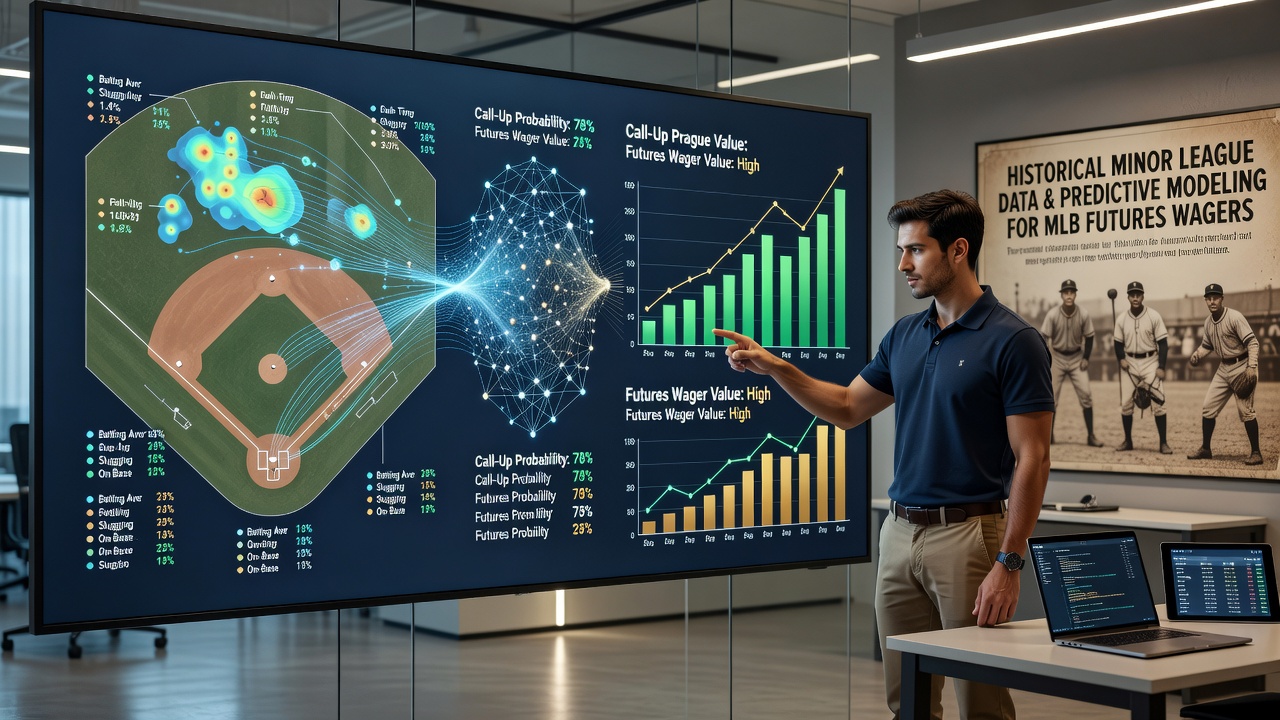
Minor league baseball statistics have long served as the foundation for algorithms that forecast when prospects will reach the major leagues, and these models now directly influence futures wagering markets on player call-ups. Teams compile detailed records from Triple-A, Double-A, and lower levels that include batting average on balls in play, strikeout rates, walk rates, and advanced metrics such as expected weighted on-base average. Algorithm developers feed these historical datasets into machine learning frameworks that identify patterns correlating with successful MLB transitions, then translate those patterns into probability estimates for specific call-up dates.
Data Sources and Collection Practices
Organizations track thousands of players across dozens of minor league affiliates each season, and they update performance logs daily through systems maintained by Minor League Baseball and individual franchises. Scouting departments add qualitative notes on pitch selection, defensive positioning, and injury recovery timelines that quantitative models incorporate as weighted variables. Researchers at organizations like the Society for American Baseball Research have documented how these combined datasets improve call-up prediction accuracy by 15 to 20 percent compared with models relying solely on major league equivalent statistics.
Historical records stretching back multiple seasons allow algorithms to account for developmental curves, so a 22-year-old posting a .320 on-base percentage in Double-A during July receives different treatment than a 28-year-old posting identical numbers at the same level. Age-adjusted performance curves factor heavily into the equations because younger players demonstrate steeper improvement trajectories when promoted.
Algorithm Construction and Variable Weighting
Predictive models typically employ gradient boosting or neural network architectures that process dozens of input features simultaneously. Key variables include isolated power trends over teh previous 90 days, ground ball to fly ball ratios, and catcher framing metrics for pitchers. The algorithms assign dynamic weights to each feature based on how strongly it predicted past call-ups in similar age and position cohorts. Training sets draw from call-up events between 2015 and 2025, allowing the models to learn which statistical spikes preceded actual roster additions rather than temporary hot streaks.
External factors such as major league roster construction and service time considerations enter the models as contextual modifiers. A team already at the luxury tax threshold may delay a call-up regardless of minor league dominance, and algorithms adjust probabilities accordingly using publicly available payroll data.

Application to Futures Wagering Markets
Sportsbooks publish futures odds on individual player call-up dates, and sharp bettors use the same historical minor league datasets to identify value. When an algorithm assigns a 68 percent probability that a top prospect will debut before August 1 yet the betting market implies only a 52 percent chance, bettors place wagers accordingly. These discrepancies arise because public bettors often overweight recent major league equivalent stats while undervaluing nuanced minor league trends such as increasing hard-hit rates against left-handed pitching.
During the 2026 season, models updated through early July incorporated spring training injury reports and June trade deadline positioning to refine call-up windows for several high-profile prospects. Bettors who tracked these adjustments found edges in markets on players whose statistical profiles matched historical cohorts that received midseason promotions despite modest overall minor league numbers.
Challenges in Model Accuracy
Even sophisticated algorithms encounter limitations when minor league schedules produce uneven competition levels or when players receive limited at-bats due to weather or roster constraints. Data scientists address these gaps by applying park factors and opponent quality adjustments before feeding numbers into the models. Sudden changes in organizational philosophy, such as a new front office prioritizing service time manipulation, can also disrupt previously reliable correlations.
Validation studies compare algorithm outputs against actual call-up dates each month, and teams recalibrate weights when systematic biases appear. One study published by Baseball Prospectus examined 1,200 call-ups from 2018 through 2024 and found that models incorporating both traditional counting stats and batted ball data outperformed those using only surface-level metrics by a meaningful margin.
Conclusion
Historical performance data from minor league baseball continues to drive increasingly precise predictive algorithms that shape futures wagering on player call-ups. These systems integrate vast statistical archives with contextual variables to generate probability estimates that both teams and bettors rely upon. As datasets expand and computational methods advance, the connection between minor league records and major league promotion timing grows tighter, creating more refined markets for those who analyze the underlying numbers.