12 Jul 2026
How Time Zone Shifts Alter Wagering Patterns in International Athletic Events
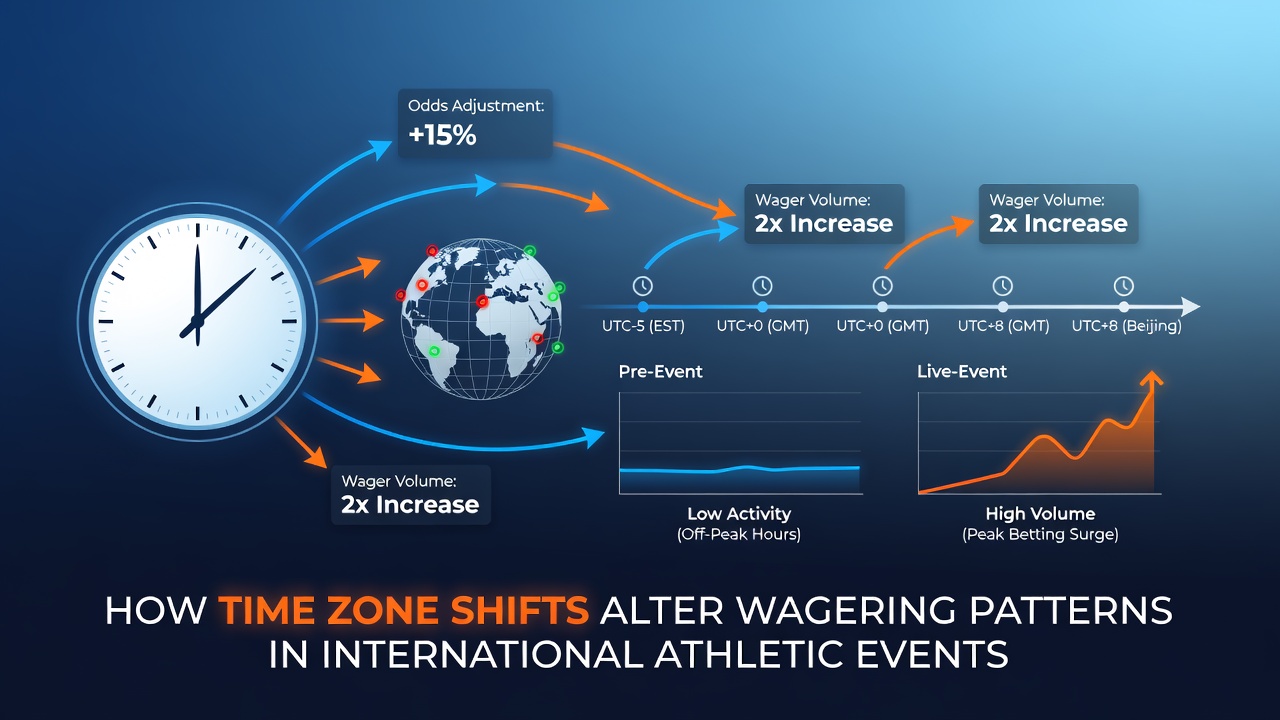
Time zone differences create measurable shifts in how bettors approach international athletic events, since participants across continents adjust their schedules around event timings that often fall outside local daylight hours. Data from sports analytics platforms shows increased activity in live markets during early morning or late evening periods when viewers in one region tune in while those in another wind down for the night.
Bettor Activity Across Continents
European soccer matches scheduled for afternoon kickoffs in the UK draw heavy participation from Asian markets during nighttime hours, whereas North American audiences place more pre-match wagers before their workdays begin. Researchers tracking transaction volumes note that bettors in Australia frequently increase stakes on NBA games that tip off after midnight local time, since those contests align with prime evening viewing in the United States. This pattern repeats across major tournaments where scheduling prioritizes host nation audiences over global convenience.
Live Betting Volume Changes
Live wagering spikes occur when time zone mismatches allow rested bettors to monitor events that others watch while fatigued. Studies conducted by academic teams in Canada reveal that prop bet adjustments rise sharply in the final quarters of games played across multiple zones, because participants who stayed awake overnight tend to chase earlier losses with smaller incremental wagers. Meanwhile, markets in overlapping time zones maintain steadier pre-game volumes that taper once the event starts.
July 2026 brings additional variables during the FIFA World Cup group stage matches, many of which kick off in North American evening slots that translate to early morning hours across Europe and Asia. Observers tracking operator reports expect liquidity to concentrate in certain player props and in-play corners rather than outright tournament futures during those windows.
Sleep Patterns and Decision Timing
Circadian rhythm disruptions influence how individuals process odds and manage bankrolls when events stretch across night hours. Figures released by the Australian Gambling Research Centre indicate that bettors logging in between 2 a.m. and 5 a.m. local time place fewer multi-leg accumulators and favor single outcomes with shorter payout delays. This shift appears because prolonged wakefulness correlates with simpler decision trees rather than complex stacking strategies.
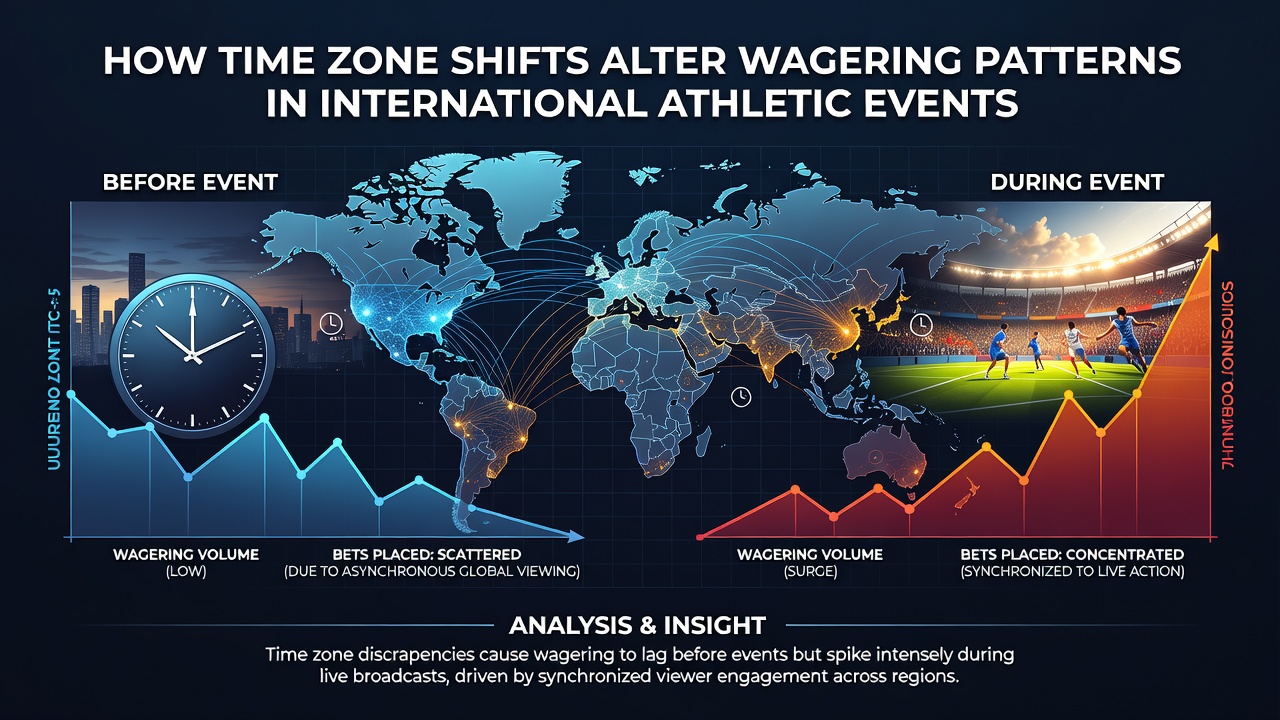
Operators adjust promotional timing accordingly, pushing deposit bonuses toward regions entering their afternoon while other markets experience reduced engagement. Those adjustments reflect observed traffic data rather than assumptions about player preferences.
Market Liquidity and Odds Movement
Bookmakers respond to these staggered participation waves by widening or tightening lines based on incoming volume from specific regions. When Asian markets dominate overnight action on European fixtures, odds on total goals often move toward lower-scoring outcomes because those bettors historically favor defensive statistical profiles. North American sessions then produce counter-movements once daytime liquidity returns.
One analysis of transaction logs from the 2024 Summer Olympics demonstrated that time zone driven liquidity gaps created temporary inefficiencies in swimming and gymnastics markets, where early-session bets from one hemisphere set baselines later corrected by participants waking in another. Similar dynamics surface in tennis Grand Slams that span multiple days across hemispheres.
Regional Regulatory Observations
Regulatory filings from bodies such as the Canadian regulatory framework for gaming document how cross-border operators monitor these temporal patterns to maintain compliance with responsible gambling prompts. Separate reports compiled by the Australian Gambling Research Centre track how jurisdictional differences in advertising windows intersect with peak betting hours created by overseas event schedules.
These filings emphasize data collection on session lengths and deposit frequencies rather than prescriptive rules about timing. Operators use the information to calibrate risk models that account for geographic clustering of activity during major international calendars.
Conclusion
Time zone effects on wagering remain consistent across repeated event cycles because human schedules and event programming rarely align perfectly. Patterns emerge in volume distribution, bet type selection, and odds responsiveness whenever international calendars place competitions outside standard local viewing windows. Continued data collection from multiple regulatory jurisdictions will clarify how these shifts evolve with expanded digital access and changing tournament formats.